 11, Nov
Bitcoin Mining Explained: How Mining Actually Works?
Bitcoin Mining Explained: How Mining Actually Works
Bitcoin mining is one of the fundamental processes behind the Bitcoin network. It helps process transactions, add new blocks to the blockchain, and maintain the security of a decentralized digital currency system.
Although the term “mining” may sound like the process of extracting something from the ground, Bitcoin mining is actually a highly specialized computing process. Miners use dedicated hardware to perform large numbers of cryptographic calculations in an attempt to add the next block to the Bitcoin blockchain.
Understanding how this process works can help beginners better understand Bitcoin, mining hardware, hashrate, mining difficulty, block rewards, and the infrastructure used by professional mining operations.
What Is Bitcoin Mining?
Bitcoin mining is the process through which specialized computers compete to solve a cryptographic problem associated with the next block of Bitcoin transactions.
When a miner successfully produces a valid block that meets the network's requirements, that block can be added to the Bitcoin blockchain. The successful miner may receive a block reward consisting of newly issued bitcoin and transaction fees included in the block.
Mining therefore serves two important purposes:
It helps process and confirm Bitcoin transactions.
It helps secure the Bitcoin network through computational work.
Unlike traditional financial systems where a central organization controls transaction processing, Bitcoin uses a distributed network of participants to maintain its blockchain.
How Does Bitcoin Mining Work?
At a simplified level, the Bitcoin mining process involves several stages.
Transactions are broadcast to the Bitcoin network and are collected by miners. Miners organize eligible transactions into a candidate block and then use specialized mining hardware to perform repeated hashing calculations.
The miner changes information within the block and repeatedly calculates a cryptographic hash. The objective is to find a hash that satisfies the current network difficulty requirement.
Because the correct result cannot normally be predicted in advance, miners perform enormous numbers of calculations every second.
The first miner to produce a valid result can broadcast the block to the network. Other Bitcoin nodes independently verify the block before accepting it as part of the blockchain.
The Role of Hashing
Hashing is at the heart of Bitcoin mining.
Bitcoin uses the SHA-256 cryptographic hashing algorithm. A hashing function takes information as input and produces a fixed-length output.
Even a small change to the input produces a completely different hash.
Bitcoin miners repeatedly calculate hashes while changing specific pieces of information in the block header. They are effectively searching for a result that satisfies the network's current target.
This is why mining requires substantial computing power.
What Is a Mining Hashrate?
Hashrate refers to the number of hashing calculations a mining device or network can perform per second.
It is commonly expressed using units such as:
TH/s — terahashes per second
PH/s — petahashes per second
EH/s — exahashes per second
For example, a machine rated at a certain number of terahashes per second can perform trillions of hashing calculations every second.
Higher hashrate generally means a miner has greater computational capacity, but hashrate alone does not determine profitability. Electricity costs, hardware efficiency, Bitcoin's market price, mining difficulty, pool fees, operating costs, and other factors also matter.
What Is Bitcoin Mining Difficulty?
Bitcoin mining difficulty controls how difficult it is for miners to produce a valid block.
The Bitcoin network automatically adjusts difficulty periodically so that blocks continue to be produced at approximately the intended network rate.
As more computational power joins the network, difficulty can increase. If mining participation and network hashrate change significantly, the difficulty mechanism adjusts accordingly.
This means that owning mining hardware today does not guarantee the same mining results in the future.
Changes in network difficulty can affect the amount of bitcoin that a given amount of hashrate can potentially generate over time.
What Is a Bitcoin Block?
A Bitcoin block is a collection of transactions and other information that is added to the blockchain.
Among other things, a block contains information that allows the network to connect it to the previous block and verify its position in the blockchain.
Miners construct candidate blocks and compete to produce a valid proof of work.
Once a block is accepted by the network, subsequent blocks build on top of it, creating the chain that gives the Bitcoin blockchain its name.
Understanding Proof of Work
Bitcoin uses a consensus mechanism known as Proof of Work.
Proof of Work requires miners to demonstrate that they have performed computational work by producing a valid hash that meets the network's requirements.
The process makes it computationally expensive to manipulate the blockchain.
A potential attacker would need substantial computing resources to compete with the honest mining network, making large-scale manipulation difficult and expensive.
This computational security is one of the fundamental characteristics of Bitcoin.
Bitcoin Mining Hardware
Modern Bitcoin mining is generally performed using specialized hardware called Application-Specific Integrated Circuits, or ASICs.
ASIC miners are designed specifically for performing the calculations required by a particular mining algorithm.
Compared with general-purpose computers, specialized mining hardware can provide substantially greater hashing performance for Bitcoin mining.
A professional mining setup may include:
ASIC mining machines
Power distribution equipment
Network infrastructure
Cooling and ventilation systems
Monitoring equipment
Racks or specialized mounting systems
Electrical protection equipment
Operating these machines at scale requires careful attention to electricity consumption, heat generation, noise, maintenance, and network connectivity.
Why Electricity Matters
Electricity is one of the most important operating costs in Bitcoin mining.
Mining hardware can operate continuously and consume significant amounts of electrical power. As a result, electricity pricing and infrastructure efficiency can have a major effect on the economics of a mining operation.
Two mining operations using similar hardware may have very different operating economics because their electricity, cooling, facility, and maintenance costs differ.
For this reason, professional miners pay close attention to energy efficiency and operational costs.
What Are Bitcoin Mining Pools?
Mining a Bitcoin block independently can be extremely difficult because the global Bitcoin network contains a large amount of computational power.
Mining pools allow multiple miners to combine their computing resources.
Instead of relying entirely on the possibility of discovering a block independently, participants contribute hashrate to a pool. When the pool earns mining rewards, distributions are generally made according to the participant's contributed work and the pool's payout structure.
Mining pools can provide more predictable reward distributions than attempting to mine entirely independently, although pool fees and payout rules should always be considered.
Where Do Bitcoin Mining Rewards Come From?
Bitcoin miners can receive compensation through two primary sources:
Block Subsidy
The Bitcoin protocol issues a predetermined amount of new bitcoin to the successful miner of a valid block, subject to the network's current issuance rules.
This block subsidy decreases over time through Bitcoin's scheduled halving mechanism.
Transaction Fees
Users can attach transaction fees when sending Bitcoin transactions. Miners may include these transactions in blocks and receive the associated fees.
The combination of block subsidy and transaction fees forms the potential reward available to miners.
However, mining rewards should not be interpreted as guaranteed income. Actual economic results depend on numerous changing factors.
What Is the Bitcoin Halving?
Bitcoin's issuance schedule includes periodic reductions in the block subsidy.
These events are commonly called Bitcoin halvings because the number of newly issued bitcoins associated with each block is reduced.
The halving mechanism is designed into Bitcoin's monetary system and contributes to its limited long-term supply.
For miners, a reduction in the block subsidy can significantly change the economics of mining, particularly if other factors such as Bitcoin price, network difficulty, electricity costs, and transaction fees do not move in a favorable direction.
Why Mining Results Can Change
Bitcoin mining is not a fixed-output process.
The amount of bitcoin associated with a particular amount of hashrate can change because of several factors, including:
Bitcoin market price
Network mining difficulty
Total network hashrate
Mining hardware efficiency
Electricity costs
Pool fees
Transaction fees
Hardware downtime
Cooling and maintenance expenses
Operational infrastructure
This is why a mining calculation made today should not automatically be treated as a prediction of future results.
Bitcoin Mining and Cloud Mining
Traditional Bitcoin mining involves owning or operating physical mining hardware.
Cloud mining uses a different operational model. Instead of personally purchasing and maintaining mining machines, a customer may obtain access to mining capacity through a service provider under specific contractual terms.
Depending on the provider, the service may handle hardware deployment, electricity, cooling, maintenance, monitoring, and other operational responsibilities.
However, cloud mining introduces its own considerations.
Customers should carefully examine:
The amount of hashrate provided
Contract duration
Service and maintenance fees
Payout methodology
Withdrawal conditions
Mining infrastructure information
Supported cryptocurrencies
Provider transparency
Contract termination conditions
Operational and counterparty risks
Cloud mining does not eliminate the underlying risks associated with cryptocurrency mining.
Is Bitcoin Mining Profitable?
There is no universal answer.
Mining economics change continuously, and profitability depends on the relationship between mining revenue and operating costs.
A simplified evaluation can consider:
Potential mining revenue − electricity costs − pool fees − maintenance costs − other operating expenses = operating result
For cloud mining, the calculation may involve additional service fees and contractual charges.
Bitcoin's market price can also change substantially, which means the value of mining rewards can rise or fall even when the amount of bitcoin produced remains similar.
Therefore, historical results or advertised estimates should not be treated as guarantees of future performance.
Why Bitcoin Mining Requires Specialized Infrastructure
Large-scale Bitcoin mining is an industrial activity rather than simply running software on a normal computer.
Modern mining facilities need to manage substantial electrical loads and continuous heat generation.
Efficient operations may require:
Industrial power systems
High-capacity ventilation
Specialized cooling
Network connectivity
Hardware monitoring
Preventive maintenance
Equipment replacement
Physical security
These infrastructure requirements are important when evaluating both traditional mining businesses and cloud mining providers.
What Beginners Should Understand Before Mining
Before considering Bitcoin mining, beginners should understand that mining combines technology, infrastructure, economics, and cryptocurrency market exposure.
A basic understanding of the following concepts is useful:
Hashrate: The amount of computational power available for mining.
Difficulty: The network parameter that influences how difficult it is to produce a valid block.
Block reward: The compensation associated with successfully mining a block.
Transaction fees: Fees attached to transactions that may become part of miner revenue.
Mining pool: A group of miners combining computational resources.
ASIC: Specialized hardware designed for cryptocurrency mining.
Energy efficiency: The relationship between mining performance and electricity consumption.
Mining contract: The terms governing access to cloud mining services when using a provider.
Understanding these terms makes it easier to evaluate mining information without relying solely on promotional claims.
Final Thoughts
Bitcoin mining is a complex combination of cryptography, specialized computing hardware, electricity, network infrastructure, and economic factors.
Miners use ASIC hardware to perform enormous numbers of hashing calculations while competing to produce valid blocks. The Bitcoin network uses Proof of Work to make the blockchain more resistant to manipulation, while mining rewards provide an economic incentive for participants to contribute computational resources.
For anyone considering traditional or cloud mining, understanding the underlying technology is just as important as understanding the economics.
Mining difficulty, Bitcoin price, electricity costs, hardware efficiency, fees, network conditions, and contract terms can all change over time. A responsible approach is therefore to evaluate the technology and costs carefully rather than assuming that mining automatically produces a fixed or guaranteed return.
Share On
Latest Blog

Cloud Mining FAQ: 15 Questions Beginners...
11 November, 2022
How to Start With Cloud Mining: A Beginn...
11 November, 2022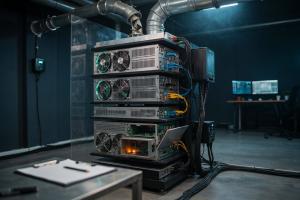
Crypto Mining Risks: What Every Beginner...
11 November, 2022
Understanding Hashrate, Mining Difficult...
11 November, 2022